
Matcha soft-serve parfait near the Kushida Shrine / Hakata old-town area, layered with green tea sauce and crunchy bits at the bottom. At about $3.34 USD, it is exactly the kind of small, excellent street snack that makes wandering shrine streets dangerous in the best way.
Album: Japan: Fukuoka favs
-

Kushida Shrine Main Building With Prayer Plaques
The main shrine building at Kushida Shrine in Hakata, framed by old trees and rows of wooden ema prayer plaques. The shrine is the spiritual home of Hakata Gion Yamakasa, the summer festival whose floats and racing teams are a defining symbol of old Hakata.
-

Kazariyama Display Float at Kushida Shrine Fukuoka
A kazariyama display float for Hakata Gion Yamakasa at Kushida Shrine, with sponsor signage for KBC/Kyushu Asahi Broadcasting. These towering decorative floats stay on display, while the smaller kakiyama racing floats are carried through Hakata during the July festival.
-
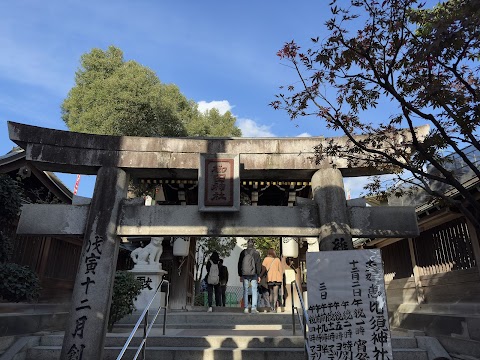
Historic Kushida Shrine Torii Gate Hakata Gion Yamakasa
The stone torii gate at Kushida Shrine, with komainu guardian figures tucked just inside and festival notices posted near the steps. The shrine sits in the heart of old Hakata and is closely tied to Hakata Gion Yamakasa, whose teams gather here before the climactic early-morning race.
-

Nagahama Ramen Yatai Shutter Art Fukuoka
Yatai Okamoto / Nagahama ramen shutter art in the Hakata area near Kushida Shrine and Canal City. Fukuoka is famous for both tonkotsu ramen and yatai street-food stalls; Nagahama ramen is a local style known for thin noodles in a pork-bone broth.
-

Kawabata Shopping Arcade Northern Entrance Fukuoka
The bustling northern entrance to the Kawabata Shopping Arcade (Kawabata Shotengai), Fukuoka’s oldest covered market street. Established over 130 years ago, this 400-meter-long arcade remains a vital commercial artery and a cultural hub, particularly during the Hakata Gion Yamakasa festival, when it serves as a primary display site for elaborate, towering festival floats known as ‘Kazari-yamakasa’.
-
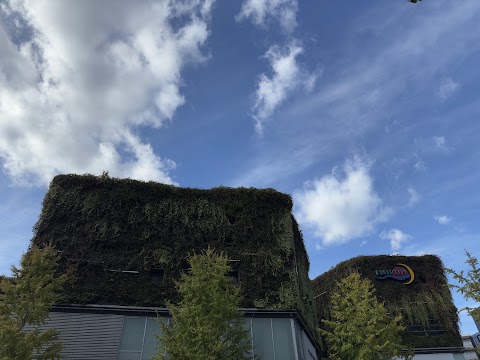
Vertical Garden Wall at Canal City Hakata
A sprawling vertical garden completely enveloping a section of the Canal City Hakata complex in Fukuoka. This expansive ‘living wall’ serves as an ecological urban intervention, designed to mitigate the heat island effect and provide natural thermal insulation, reflecting a contemporary shift towards integrating sustainable, green infrastructure within dense metropolitan commercial developments.
-

Rakusuien Garden Entrance Gate and Stone Path
The entrance gate of Rakusuien, featuring a wooden plaque inscribed with the garden’s name, opening onto a ‘nobedan’ stone-paved path. This path, a staple of traditional tea garden design, was meticulously laid out by merchant Shimomura Zenitaro in 1906 to transition visitors from the urban bustle into a state of mindfulness appropriate for the formal tea ceremony.
-
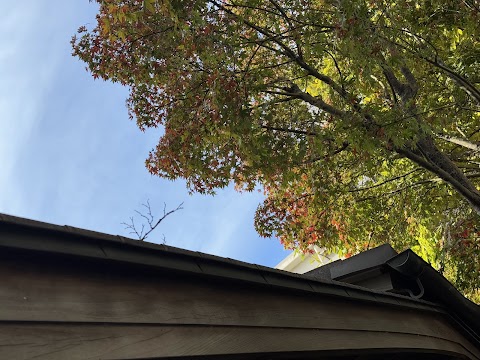
Autumn Maple Foliage Under Traditional Eaves Rakusuien
Vibrant autumn maple foliage (momiji) viewed from beneath the traditional eaves of a building at Rakusuien in Fukuoka. The appreciation of changing leaf colors, known as ‘momijigari,’ is a cultural tradition in Japan dating back to the 8th century, and gardens like Rakusuien provide a tranquil setting to observe this seasonal transition amidst historical architecture.
-

Rakusuien Pond and Stone Lantern With Urban Views
A serene view of the pond and traditional stone lantern at Rakusuien, framed by modern urban architecture in the background. This landscape is a classic example of a ‘stroll garden’ (kaiyu-shiki-teien), where meticulous natural elements like the pond and greenery are strategically placed to offer evolving perspectives as one wanders through the grounds.