
A rock dove (Columba livia) perched atop a weathered wooden post within the serene grounds of Rakusuien in Fukuoka. Originally established as a villa for a prominent Meiji-era merchant in 1906, Rakusuien is now a public Japanese garden centered around a large pond, preserving traditional landscaping and a ‘Suikinkutsu’ water zither.
Album: Japan: Fukuoka favs
-

Lucky Frog Sculpture Canal City Hakata Fukuoka
A whimsical and vibrantly painted sculpture titled ‘Lucky Frog’ by Taiwanese artist Hung Yi, situated within the public spaces of Canal City Hakata. The artwork is characterized by its intricate patterns and bold color palette, reflecting a fusion of traditional folk aesthetics and contemporary Asian pop art, designed to enhance the complex’s playful and culturally rich environment.
-

Canal City Hakata’s Curved Terracotta Facade Design
A detailed view of the textured, earth-toned facade at Canal City Hakata, illustrating the vibrant horizontal banding and curvilinear geometry that define the complex. Jon Jerde, the architect, utilized these rhythmic color patterns to symbolize terrestrial layers, aiming to create an ‘experiential’ urban environment that prioritizes pedestrian movement and visual stimulation.
-

Canal City Hakata’s Vibrant Architectural Design
The striking, multi-colored architecture of Canal City Hakata, a premier shopping and entertainment complex in Fukuoka. Designed by the Jerde Partnership and opened in 1996, this ‘city within a city’ is renowned for its curvilinear forms and an artificial canal that serves as a central aesthetic and recreational feature, reflecting modern Japanese urban design’s integration of water and commercial space.
-
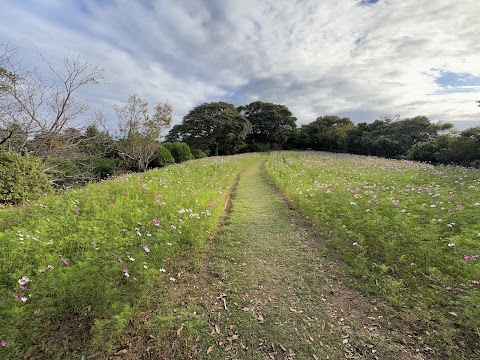
Cosmos Flowers Blanket Nokonoshima Island Park Path
A winding dirt path traverses a sprawling field of blooming cosmos flowers (Cosmos bipinnatus) at Nokonoshima Island Park. In Japan, these blossoms are referred to as ‘akizakura’ or ‘autumn cherry blossoms’ because their delicate petals resemble cherry blossoms; the park’s elevated position provides a dramatic backdrop for this seasonal display, which attracts thousands of visitors annually.
-

Nokonoko Ball Sport Sign at Nokonoshima Island Park
A vibrant, illustrated signage board for ‘Nokonoko Ball’ at Nokonoshima Island Park, depicting the playful nature of this original sport. Developed specifically for the park, Nokonoko Ball is a hybrid game that blends the mechanics of gateball and golf, allowing visitors to navigate a scenic course using wooden mallets and oversized balls.
-

Wooden Swing Overlooking Nokonoshima Island Park Mountains
A solitary wooden swing suspended from a tree branch overlooking the manicured grounds and distant mountains of Nokonoshima Island Park. Situated in Hakata Bay, this island has a long human history dating back to the prehistoric Jomon period and once served as an important defensive outpost for the mainland.
-

Friendly Rabbits at Nokonoshima Island Park Petting Zoo
Domestic rabbits (Oryctolagus cuniculus) residing in the petting zoo area of Nokonoshima Island Park. These mammals are the only species in their genus and have been domesticated for centuries; at this park, they represent part of the diverse small animal attractions that complement the seasonal floral landscapes of the island.
-
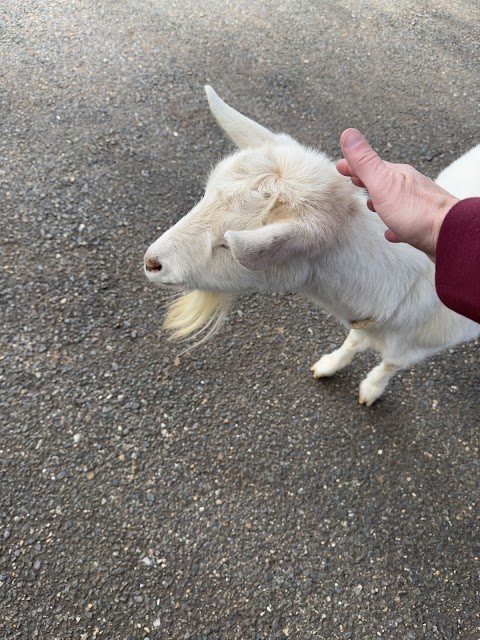
Friendly White Goat at Nokonoshima Island Park
A white domestic goat (Capra hircus) interacts with a visitor at the petting zoo within Nokonoshima Island Park. These animals are a popular attraction at the park, which serves as a natural retreat for Fukuoka residents; the domestic goat is one of the oldest domesticated species, having been bred for its milk, meat, and fur for over 9,000 years.
-

Heart-Shaped Ema at Nokonoshima Island Park Shrine
A seaside spiritual corner within Nokonoshima Island Park featuring heart-shaped ‘Ema’ (votive tablets) and a small wooden ‘Hokora’ shrine overlooking Hakata Bay. While traditional Ema are rectangular and often depict horses—as horses were historically considered the mounts of the gods—modern variations like these heart-shaped versions are increasingly common at sites associated with love and relationships.