
A Zen temple hall with black-timbered lattice walls and a cusped katomado window — likely Jotenji Temple’s hondo, a Rinzai Zen temple right next to Tochoji. Jotenji was founded in 1242 by the monk Shoichi Kokushi, who is also credited with bringing udon, soba, and manju-making techniques back from China.
Album: Japan: Fukuoka favs
-
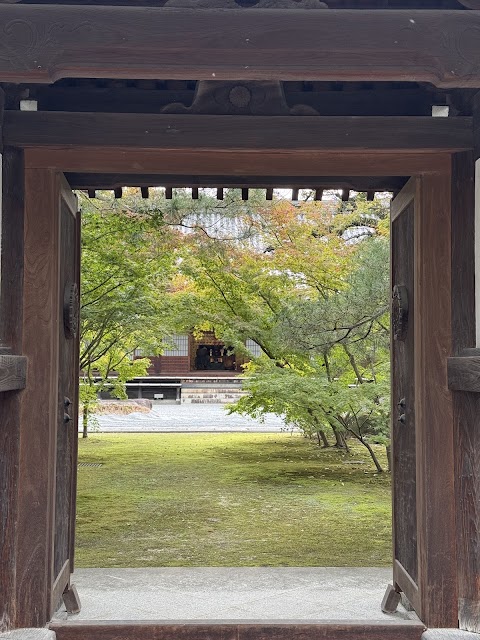
Wooden Temple Gate Opens to Sacred Moss Garden
Looking through a temple gate onto a mossy lawn and inner hall, likely within the Tochoji/Jotenji temple grounds — these wooden sanmon gates traditionally mark the symbolic threshold between the ordinary world and sacred temple precincts.
-
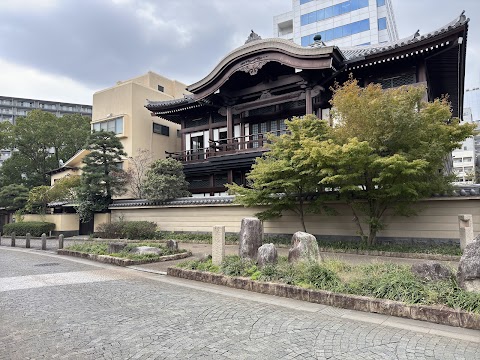
Tochoji Temple’s Historic Karahafu Gable and Rock Garden
Tochoji Temple’s main hall, its gracefully curved karahafu gable facing the street, with a rock garden in front. Tochoji was founded in 806 by the monk Kukai (Kobo Daishi) right after he returned from studying esoteric Buddhism in China, making it one of the oldest temples in Japan.
-

Modern Tower Rising Above Tochoji Temple Fukuoka
A modern glass office tower rising just beside Tochoji Temple — a striking bit of visual whiplash you get walking through Hakata, where centuries-old temple grounds sit shoulder-to-shoulder with contemporary high-rises.
-

Gilded Gravestone With Dream Kanji and Nanten Berries
A memorial gravestone in the temple cemetery, gilded with a single kanji character (possibly 夢, “dream”) likely part of a posthumous Buddhist name, still tended with fresh flower offerings. The red berries are nanten (heavenly bamboo), a plant traditionally placed near graves and entryways in Japan because its name is a homophone for “turning hardship into good fortune.”
-
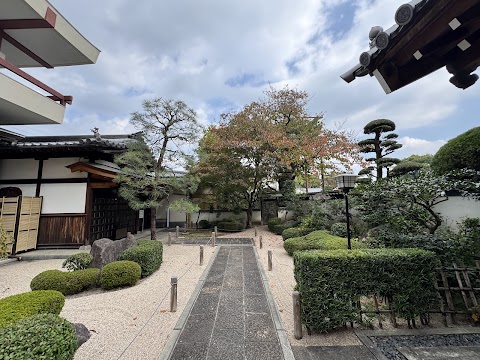
Zen Dry Garden Path at Jotenji Temple Fukuoka
A raked karesansui (dry-landscape) garden path, likely at Jotenji Temple — another of Hakata’s historic Zen temples in this same district, famously credited by local tradition as the place where Japanese udon, soba, and manju were first introduced from China in the 13th century.
-

Stone Memorial Stupas at Tochoji Temple Fukuoka
Stone memorial stupas (muhoto) in Tochoji Temple’s cemetery grounds — this bulb-topped, stacked-stone style is traditionally used to mark the graves of Zen and Shingon abbots, distinct from the more common five-tiered gorinto seen elsewhere in Japanese Buddhist cemeteries.
-

Tochoji Temple Vermillion Pagoda Fukuoka Japan
The five-story pagoda at Tochoji Temple (Hakata’s oldest Shingon temple, founded in 806 by Kukai). Completed in 2011, this vermillion pagoda is one of the tallest wooden five-story pagodas in Japan; the temple is also home to a 10.8m seated Buddha, one of the largest wooden Buddha statues in the country.
-

Ancient Stone Marker in Hakata’s Historic Gion District
A stone marker outside a traditional machiya house in Hakata’s old temple quarter (Gion district), just steps from Tochoji Temple and Kushida Shrine — the carved characters are likely a temple name, though too weathered here to confirm. This neighborhood is one of Fukuoka’s oldest, tracing back to the 13th century when the Zen monk Shoichi Kokushi helped found the area’s temples.
-

Grand Hyatt Fukuoka Lobby Canal City Views
Hotel lobby & restaurant of the Grand Hyatt Fukuoka — you can see Canal City Hakata’s colorful curved facade through the windows, since the hotel is built right into that same complex.